What Might an NQ Score Look Like?
If quantum leadership is about the intelligence of the system (not just the individuals within it) then NQ is the measure that matters most.

We’ve measured IQ for over a century. We’ve developed tools to assess EQ, SQ, even AQ.
But what about NQ — Network (or Node System, or n=all) Quotient?
If quantum leadership is about the intelligence of the system — not just the individuals within it — then NQ is the measure that matters most.
So what would it actually mean to score a team’s or organization’s NQ?
And perhaps more importantly: Should we?
From Individual Brilliance to Systemic Flow
Let’s summarize the Quantum Leadership formula:
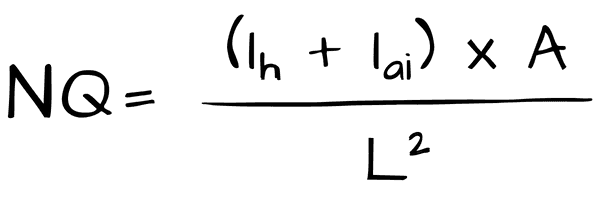
I_h: Human insight — the diversity, depth, and relevance of collective wisdom.
I_{ai}: Artificial lift — how effectively AI and tools are amplifying, not replacing, thinking.
A: Alignment — the emotional, relational, and strategic coherence across the system.
L: Latency — the time it takes to act on insight, especially under pressure.
If IQ tells us how smart a person is, then NQ tells us how alive and intelligent the individual systems or group systems are as a whole.
It’s not about scoring individuals or groups. It’s what the score tells us about the quality and flow of intelligence across systems.
What a High-NQ System Feels Like
You don’t need a formal assessment to know when you’re in a high-NQ environment:
Insight circulates quickly. Ideas show up from anywhere.
Meetings are signal-rich and momentum-generating.
People feel emotionally safe and accountable.
AI is woven into workflows to lift (not clutter) capacity.
Decisions are timely, and often made by the right people closest to the signal.
High NQ feels like aliveness. It feels like coherence in motion.
How Might We Measure It?
Here’s a sketch of what a Network Quotient diagnostic might include:
Signal Flow Index
How quickly does information move across teams or layers?
How often does key insight get lost or delayed?
Latency Score
Time from sensing something important to acting on it.
Average delay in decision-making cycles.
Alignment Quality
Level of clarity and buy-in across roles, not just at the top.
Emotional and relational resonance (not just agreement).
AI Integration Index
How meaningfully AI or digital tools are enhancing human capacity.
Degree of redundancy reduction, insight generation, or task amplification.
Coherence Pulse
Subjective measure of “flow” or ease in collaboration.
Do people feel the system is working with them — or against them?
This wouldn’t be a scorecard for performance. It would be a snapshot of systemic health.
A diagnostic not of outputs, but of conditions.
Should We Score NQ?
Maybe. But carefully. The risk of scoring anything is that we begin to chase the number, not the quality of the thing itself. That said, a well-designed NQ measure could act like an early warning system:
Where are we over-relying on AI and under-investing in connection?
Where is latency quietly eroding our impact?
Where is intelligence stuck, and how might we set it free?
Used well, an NQ score becomes not a verdict, but a conversation starter.
The Real Value Isn’t the Score
It’s the reflection it invites. Because in post-AI leadership, the question isn’t “How smart are we?” It’s “How fluid is our intelligence, and how fast can it move?” And when we tune for that, the score takes care of itself.