Three Paradoxes I Keep Running Into
Paradox isn’t a problem to solve. It’s a signal to listen to. A clue that the system is evolving, and we’re being invited to lead from a different place.

The deeper I go into leadership work, the more I find myself bumping into paradox.
Not just complexity, not just contradiction — but true paradox. Two things that seem mutually exclusive, but are somehow both true, at the same time. Paradox is where linear thinking starts to crack — and deeper intelligence begins to surface.
In the world of Quantum Leadership, paradox isn’t a problem to solve. It’s a signal to listen to. A clue that the system is evolving, and we’re being invited to lead from a different place.
Here are three paradoxes I keep encountering — in teams, in coaching rooms, and in myself.
1. The smarter the team, the slower the system.
You’d think high IQ, top-tier talent, and deep expertise would make a team move fast.
Sometimes, it does. But often, it leads to hesitation, over-processing, or competitive defensiveness.
Why? Because intelligence without trust slows everything down.
People wait to speak until their idea is perfect.
Decisions get looped because no one wants to be wrong.
Everyone’s the expert, but no one owns the call.
The result? Latency creeps in.
And in the Quantum formula, latency is squared:
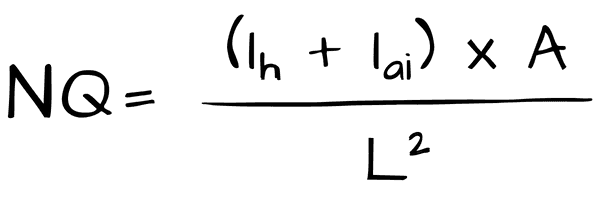
So even small slowdowns—caused by ego, fear, or perfectionism—compound into system drag.
Paradoxically, the smartest teams need the simplest agreements about how to move together.
They need clarity not just in thought—but in motion.
2. More alignment = less control.
Most leaders believe alignment comes from control—clear rules, tight coordination, central approvals.
But in living systems, the opposite is often true.
The more real alignment you have—shared vision, deep trust, relational coherence—the less you need to control.
People move fluidly. Decisions get made closer to the edge. The system self-adjusts.
But here’s the catch: this kind of alignment takes more work up front.
You have to slow down to connect, clarify, and calibrate.
You have to let go of command so you can cultivate coherence.
And you have to believe that trust, once built, is more efficient than oversight.
It’s a hard leap. But once made, the system accelerates without falling apart.
3. AI makes leadership more human.
This one still surprises people.
We often assume that AI dehumanizes work. And yes, it can—if we use it to replace judgment, emotion, or presence.
But what I keep seeing is this:
AI takes friction out of the mechanical parts of leadership—status updates, content creation, basic sensemaking—which frees up more space for relational work.
When used intentionally, AI doesn’t take the human out of leadership.
It amplifies the part that only humans can do.
AI handles the noise. Leaders handle the nuance.
The paradox is that the more intelligently we use machines, the more emotionally available we can become.
Living With the Tension
These paradoxes won’t be resolved. They’re not meant to be.
They’re meant to be held. Felt. Lived into.
And the leaders who learn to live inside paradox—without rushing to simplify or solve—are the ones who end up leading from a deeper place.
Because in the end, paradox isn’t a problem.
It’s a portal.