What Coaching Has Taught Me About Organizational Intelligence
Organizational intelligence isn’t the sum of smart people. It’s the quality of connection between them.

If you want to understand an organization, listen to what gets whispered after the meeting.
Coaching has given me a privileged vantage point—not just into individual growth, but into the deeper dynamics of teams and systems. And over time, I’ve started to see the same patterns repeat: moments of misalignment, unseen talent, brilliant ideas that don’t land, trust that takes months to build and seconds to lose.
What I’ve learned is this: organizational intelligence isn’t the sum of smart people. It’s the quality of connection between them.
And that insight changed everything for me.
The System is Always Speaking
Every coaching session reveals more than what’s said. There’s a field behind the words—a tone, a tension, a subtle dance of permission and self-protection. When I coach leaders, I’m not just listening for their answers. I’m listening for the system they’re carrying.
I’ve heard:
A brilliant COO who couldn’t speak up in meetings because the team unconsciously revolved around the CEO’s mood.
A high-trust team that still couldn’t execute quickly—because no one knew who had the authority to decide.
A leader who generated insight every day, but didn’t know how to translate it into shared language the team could move with.
These aren’t personal flaws. They’re systemic reflections.
And once you see that, you can’t unsee it.
Insight Is Not Enough
One of the paradoxes of coaching is that breakthrough moments don’t always lead to change. I’ve seen leaders have profound realizations, then walk into systems that can’t metabolize what they now see.
That’s what led me to develop the concept of Quantum Leadership—an approach focused not on individual performance, but on how intelligence moves (or gets stuck) in the whole.
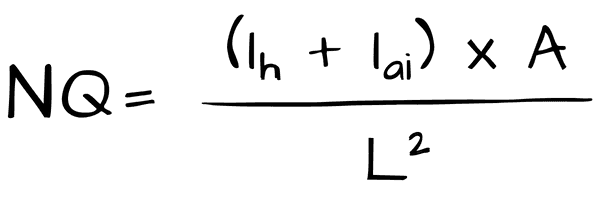
This formula has become a sort of compass in my work.
Human insight (I_h) is powerful—but only if the system can hear it.
AI (I_ai) adds capacity—but only if people know how to integrate it meaningfully.
Alignment (A) gives clarity—but only if there’s safety and shared intention.
Latency (L) slows it all down—especially when decisions are delayed by fear, confusion, or structural drag.
As a coach, I’ve learned to sense where the real friction is. It’s rarely in the individual. It’s in the system that surrounds them.
What Changes When We Coach the System
When you start listening systemically, everything changes.
You stop asking:
“Why isn’t this person leading better?”
And start asking:
“What is this system perfectly designed to produce?”
“What permission is missing?”
“Where is intelligence being blocked or diluted?”
You begin to see that the job of leadership isn’t just to perform—it’s to tune the conditions that allow others to lead too.
Coaching as System Intelligence Work
At its best, coaching becomes less about fixing and more about freeing:
Freeing insight to move where it’s needed.
Freeing people from roles that no longer serve them.
Freeing teams from outdated rules about who gets to speak, decide, or dream.
That’s what organizational intelligence is: not how smart the chart looks, but how alive the system feels.
And as a coach, I’ve come to believe that’s the most important intelligence of all.