The Problem with Static Assessments in a Dynamic Leadership World
Hogan. Leadership Circle. StrengthsFinder. DiSC. Enneagram. Working Genius. Kolbe. Predictive Index. Just to name a few.
If you’ve been near any leadership development program in the past two decades, you’ve likely encountered some combination of these tools. And for good reason. Each offers a valuable lens into how a leader thinks, behaves, relates, reacts, and creates.

These assessments have become deeply embedded in the scaffolding of leadership development. They help individuals and teams gain self-awareness, identify strengths and derailers, and find language for their style of impact.
And yet, in the current moment shaped by increased complexity, and rapidly evolving systems (ai), these tools are starting to show their limitations.
Not because they’re wrong. But because they’re static. And leadership is anything but.
Leadership Doesn’t Sit Still
Most assessments offer a snapshot. They capture tendencies, preferences, or patterns based on how someone answers questions in a moment of time. That’s incredibly useful for building a baseline. But what they don’t capture is context. Leadership lives in context.
A leader under stress may show up one way. That same leader in a highly coherent, low-latency team may show up very differently. Add AI to their workflow and new behaviors emerge.
Leadership is not a fixed profile. It is a dynamic capacity shaped by environment, systems (human, and ai), and relational patterns.
Assessments as Puzzle Pieces, Not Prescriptions
We need to stop treating assessments as definitions. They are data points inside a larger, moving system. Are they useful? Yes. Without question. But their real value appears when they are contextualized. We need to see them as puzzle pieces that must be integrated into a living leadership system.
This is where Quantum Leadership and the Network Quotient, or NQ, lens come in.
Iₕ: The Space Where Assessments Come Alive
In the NQ formula:
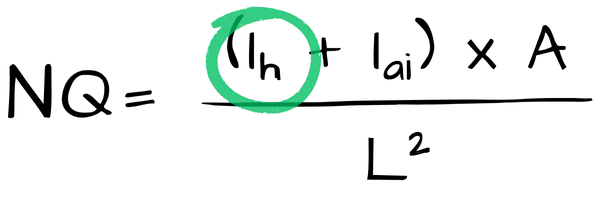
Iₕ represents Human Intelligence. It is a composite of multiple intelligences including IQ, EQ, AQ, SQ, and SI. These intelligences (and insights) move through individuals and through systems.
Leadership assessments offer fragments of Iₕ. They provide moment-in-time perspectives on how someone tends to operate. Their real value, however, unfolds in context.
When seen through the Quantum Leadership lens, assessments are not endpoints or labels. They become:
Starting points for reflection and insight
Reference points to track growth over time
Shared language that supports developmental conversations between leaders, teams, and coaches
Rather than defining who a leader is, assessments help clarify how their intelligences are being expressed. They point to where that expression may be blocked, stretched, or under-leveraged inside the system.
The key is not just having insight. It is understanding how that insight interacts with everything else in motion, including team dynamics, organizational culture, AI tooling, and the pace of change.
From Diagnosis to Dynamic Insight
Quantum Leadership does not discard traditional assessments. It amplifies their value by asking better questions.
How do these assessment insights show up in live dynamics and under pressure?
Where is intelligence getting stuck psychologically, relationally, operationally, or technically?
How does AI change what a strength looks like, or how a derailment shows up?
From a leadership coaches’ perspective, we are no longer coaching individuals in isolation. We are working with living systems that include fast feedback loops, machine intelligence, and exponential complexity.
What’s Needed Now
Leadership development needs to evolve from categorization to calibration. From static trait-mapping to dynamic intelligence design.
Assessments still matter. They matter most when they are part of an integrated approach that acknowledges three truths.
Leadership is not fixed.
Intelligence is collective.
Context is everything.
Quantum Leadership provides the lens. NQ provides a key language. Together, they turn good assessments into actionable intelligence.