The Physics of Flow: Why Latency Kills and Alignment Heals
If you want to understand how well a system is functioning, look at how fast it can learn. Not how fast it can execute. Not how fast it can ship. But how quickly it can sense something new, make meaning of it, and act in alignment.

That’s what I mean by flow.
In high-functioning teams, intelligence flows easily. Insight shows up, gets shared, gets metabolized, and becomes momentum. In struggling systems, that same insight gets caught in delays. Over-analysis, unclear ownership, misaligned agendas, or emotional fear, to name a few. And the cost isn’t just wasted time. It’s lost trust, energy, and innovation.
This is where the formula for Quantum Leadership becomes more than just a thought experiment:
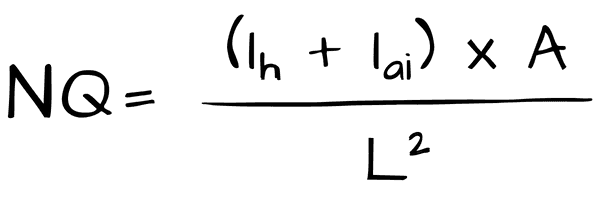
Let’s focus on the denominator: L², or Latency squared.
Latency is the time between information arrival and decision execution. And it compounds. The longer a team waits to act on good information, the more entropy it introduces into the system (ex., doubt, debate, disconnection). The signal fades. The energy dissipates. The opportunity window closes.
This isn’t about rushing. It’s about responsiveness.
In a post-AI environment where signals are constant and change is continuous, decision latency becomes one of the most critical and underappreciated leadership metrics. And it’s often invisible… hiding inside meeting calendars, approval chains, and the “Let’s circle back” reflex that dominates corporate culture.
Which brings us to A: the Alignment coefficient.
If latency is about speed, alignment is about coherence. Alignment doesn’t just mean agreement. It means shared clarity. Emotional buy-in. Strategic resonance. It means the team is pointing in the same direction and feels safe enough to move.
Here’s the paradox: high alignment actually reduces the need for high control. When people are connected, trusted, and informed, they don’t need micromanagement. They move faster. They move together.
So in this model, alignment is the amplifier. Latency is the drag.
Most leadership teams I work with are brilliant. They don’t need more strategy sessions. They need more flow.
They need:
Fewer status meetings, more signal-sensing conversations.
Fewer delays for consensus, more clarity on how decisions are made.
Fewer control loops, more feedback loops.
And they need to treat alignment not as a soft “nice-to-have,” but as operational infrastructure.
Because when alignment is low and latency is high, the system slows to a crawl… no matter how smart the people or how advanced the tech.
But when alignment is high and latency is low, something else kicks in: flow state at the organizational level.
That’s when teams don’t just execute. They emerge into something greater than the sum of their parts.
It’s not magic. It’s physics. And it’s time we started leading that way.