Meeting Design for Quantum Teams: Less Talk, More Signal
In a post-AI world, where speed is real and attention is precious, meetings can no longer be time blocks. They have to be signal amplifiers.

The meeting isn’t the problem. The signal-to-noise ratio is.
Most teams aren’t having too many meetings — they’re just having too many low-signal meetings.
Updates that could have been async. Conversations that loop without landing. Decisions that stall because the right voices aren’t in the room — or because the room is full but the clarity is missing.
In a post-AI world, where speed is real and attention is precious, meetings can no longer be time blocks.
They have to be signal amplifiers.
Why Meetings Matter More Than Ever
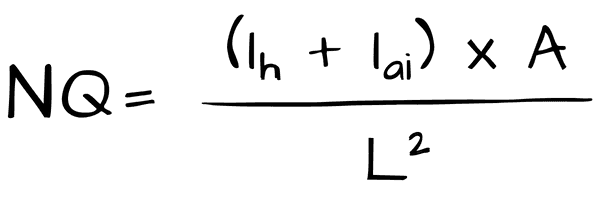
In the Quantum Leadership model, we’re always tuning for system intelligence:
And here’s what I’ve found:
Meetings are one of the most visible, visceral reflections of a system’s intelligence.
They tell you:
How human insight (I_h) is being surfaced—or silenced.
How well AI or automation (I_ai) is supporting preparation or pattern detection.
Whether alignment (A) is a real phenomenon or just a slide deck.
And most critically, how much latency (L²) is introduced through inertia, avoidance, or dysfunction.
You don’t have to measure all this directly. You can feel it.
You know when a meeting is alive. And you definitely know when it’s not.
Designing for Signal
So what does a “Quantum” meeting look like? Three core shifts:
From Agenda to Intention
Instead of “What do we need to talk about?”, ask “What signal are we here to surface, align on, or act on?”
Be clear on why this conversation needs to happen live—not just what topics need airtime.
From Report-Out to Sensemaking
If the meeting is just updates, automate it. Let AI or async tools summarize.
Use your human time for what machines can’t do: interpret meaning, surface emotion, explore tension, calibrate energy.
From Presence to Pattern
Quantum meetings aren’t about everyone showing up and saying something.
They’re about noticing the system: What’s being said and unsaid? What’s repeating? What’s stuck? What’s emerging?
Tools That Help (and Hinder)
Helpful:
Shared dashboards that eliminate the need for status updates.
AI-generated summaries of key signals since last check-in.
Pre-meeting prompts that ask, “What are you sensing in the system right now?”
Not helpful:
Agendas that try to do too much in too little time.
Meetings scheduled out of habit, not need.
Rooms where clarity is sacrificed for comfort.
The Leader’s Role
As a leader, your job isn’t to run the meeting. It’s to tune the frequency.
Are we hearing what matters?
Are we avoiding what’s hard?
Are we confusing politeness with progress?
Are we turning signal into shared action?
Great meetings aren’t accidents. They’re designed. They’re curated. They’re adjusted in real time.
And they become the tuning forks of the system — resonating alignment, reducing latency, and releasing stuck energy.
In a world of accelerating inputs, your meeting isn’t just a block on the calendar.
It’s a choice: to amplify intelligence — or to dilute it.
Choose wisely.