Team Diagnostics for the Post-AI Era
In a world where intelligence can be distributed across people, platforms, and AI systems, we need a new way to sense how well a team is actually functioning.

Most team assessments are still built on 20th-century assumptions. They measure personality, strengths, engagement, maybe psychological safety — and all of that is useful. But in a world where intelligence can be distributed across people, platforms, and AI systems, we need a new way to sense how well a team is actually functioning.
We need diagnostics that don’t just ask how people are doing — but how the system is moving.
That’s the promise of post-AI leadership: not just managing individuals, but tuning the conditions that allow intelligence to emerge, flow, and amplify.
What We’re Actually Diagnosing
In Quantum Leadership, we’re interested in something more than team performance. We’re looking at network intelligence — how well insight, trust, and alignment move through a team in real time.
The core question becomes:
How intelligently is this team operating as a collective system?
To assess that, we can draw directly from the Quantum Leadership formula:
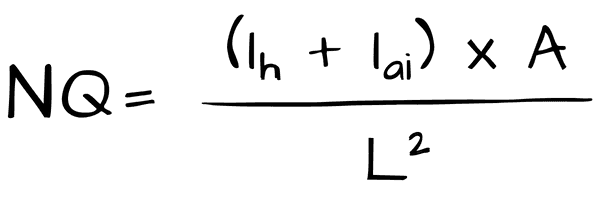
Your diagnostic, then, becomes an inquiry into:
Human Insight (I_h): Are we drawing on the full range of lived and professional intelligence in the room—or relying on the usual voices?
Artificial Lift (I_ai): Are we effectively using AI or automation to amplify insight, reduce friction, or accelerate sensemaking?
Alignment (A): Do we have shared clarity? Emotional coherence? The ability to pivot without fracturing?
Latency (L): How long does it take us to go from noticing something… to doing something about it?
Each of these becomes a lens to assess not just individuals, but interactions.
Signals and Questions
Here are some practical questions you can use to sense each part of the system:
Human Insight
Do we routinely surface insights from across levels and functions?
Is there psychological safety to share emerging signals, even if they challenge the narrative?
Are diverse perspectives used to widen understanding—or just to tick a box?
Artificial Lift
How are we currently using AI or digital tools to amplify (not just automate) our thinking?
Is our tooling reducing friction or increasing noise?
Are we learning from the patterns our tools surface—or ignoring them?
Alignment
Can this team clearly articulate a shared purpose?
Do we experience emotional alignment—even in tension?
Are we coordinated across roles and responsibilities, or compensating for constant misfires?
Latency
How long does it take to move from signal to decision?
What causes most of our delays—lack of clarity, fear of conflict, structural approval chains?
Are we tracking decision latency as a team health metric?
Putting It Into Practice
You don’t need a fancy tool to do this. You need structured reflection, honest dialogue, and a willingness to see your team as a system — not just a group of people.
Try this: Pick one quadrant of the formula. Run a team retrospective using just that lens.
Example:
“What slowed us down this quarter?” (Latency)
“What signal did we miss, and why?” (Insight)
“How aligned were we in the moments that mattered?” (Alignment)
The goal isn’t to grade the team.
It’s to make the invisible dynamics visible — so you can start shifting them.
The Future of Diagnostics
In a post-AI world, team intelligence is the real competitive edge. Not just talent. Not just tools. But the collective capacity to sense, align, and act at speed. Diagnostics, then, are no longer about individual traits. They’re about systemic flow.
And the teams that learn to see themselves that way?
They don’t just improve. They evolve.