Collapsing the Wave: What Real-Time Leadership Actually Feels Like

In quantum physics, superposition is the state where multiple possibilities exist at once.
But the moment you observe it — or make a choice — the wave collapses into a single outcome. We used that metaphor to describe high-NQ teams: ones that hold ambiguity well, let insight build, and don’t rush to false clarity.
But here’s the next question:
How do you know when it’s time to collapse the wave?
And what does that actually feel like in real-time leadership?
Not Too Soon, Not Too Late
The art of collapsing the wave is about timing and attunement.
Do it too early, and you short-circuit potential.
Do it too late, and you lose momentum—or worse, coherence.
In practice, this looks like:
Making a decision not when the data is perfect, but when the signal feels clear enough
Sensing when a group is aligned enough to move, even if not everyone fully agrees
Trusting your internal readiness, even if external certainty is still incomplete
It’s less about green lights and red lights—and more about noticing the hum of collective readiness.
What It Feels Like
Leaders who know how to collapse the wave can usually feel the shift in the room or in the rhythm.
It often sounds like:
“I feel we have what we need to move.”
“Let’s test this and see what we learn.”
“We’re never going to have 100%. Let’s go with 80% and tighten alignment as we move.”
There’s a subtle confidence. Not from knowing everything, but from sensing the field is ready to act.
It’s not bravado. It’s coherent motion.
The Quantum Leadership Frame
In the Quantum formula:
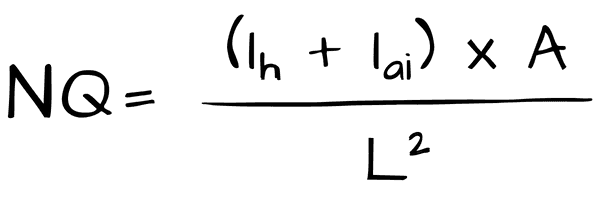
The moment of collapse is where alignment (A) meets low latency (L²).
You’ve gathered human insight (I_h), leveraged AI if needed (I_ai), built shared sensemaking (A), and now you move—with speed, not recklessness.
That moment doesn’t look heroic. It often looks quiet. Calm. Clear. Someone says “I think it’s time,” and everyone nods. And the system moves.
Practicing the Collapse
Here’s a practice to try. Next time you’re in a moment of group indecision, don’t push for answers.
Instead, ask:
“What feels like it’s already decided, even if we haven’t said it yet?”
“What would we do if we trusted what we already know?”
“What signal is trying to move—and what’s keeping us from letting it?”
These questions often surface what’s ready — even if it isn’t fully formed. And once that readiness is named, collapsing the wave becomes less about pressure and more about permission.
Final Thought
Collapsing the wave is less about control and more about tuned leadership. It’s knowing when enough signal has landed. It’s trusting the field over the formula. It’s the moment when possibility gives way to motion. And in systems that learn how to move this way? That’s when NQ really starts to rise.