Is Your Team in Superposition? A Curious Hypothesis About NQ

Here’s a strange but exciting thought experiment:
What if the most intelligent teams aren’t the ones who are clear all the time… but the ones who know how to stay in uncertainty—together—for just long enough?
In quantum physics, there’s this concept called superposition. A particle can exist in multiple potential states at once—until it’s observed. Then it collapses into one. It sounds abstract. But stay with me. Because the more I work with teams navigating complexity, the more I wonder:
What if high NQ teams function more like quantum systems than mechanical ones?
The Superposition of Strategy
Most leadership teams are wired for clarity. Decide, commit, move. That’s Newtonian logic. Linear, predictable, efficient. But what happens when you’re facing ambiguity, rapid change, or competing priorities? The old model breaks down.
High NQ teams don’t rush to clarity. They sit in superposition — a state of productive ambiguity — where multiple perspectives coexist, unforced. It’s not indecision. It’s disciplined openness. The decision will come. But they don’t collapse the wave too early.
What Superposition Looks Like in a Team
You’ve probably felt it before:
The team is aligned, but not uniform.
There’s disagreement, but also deep trust.
No one’s pretending to have the answer, yet momentum is building.
It feels weirdly alive.
Like the system is thinking, sensing, evolving in real time. And when the moment is right, the team collapses the wave. They make the move. Not because they forced alignment, but because coherence emerged. That’s a superposition moment. And it’s a signal of high NQ.
Why This Might Matter
In the Quantum Leadership formula:
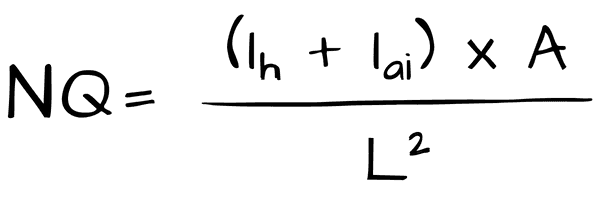
Superposition helps in all three places:
It keeps I_h (human insight) alive by letting multiple ideas breathe.
It expands A (alignment) by building shared understanding before forcing decisions.
It reduces L (latency) in the long run, because once the collapse happens, action is clean and fast.
Rushing to collapse too soon creates friction. Staying in superposition too long creates drift. But tuning that edge? That’s leadership art.
Just a Hypothesis… But a Fun One
To be clear, this isn’t a physics paper. It’s a metaphor. A playful lens. A curious theory. But one I keep testing in the field:
The best leaders don’t just manage clarity — they host complexity. They don’t just decide. They listen to the field, feel when coherence starts to hum, and move at the right moment.
Not too soon. Not too late. Just like a particle. Just like a wave.
Just like a team learning how to lead itself.