Quantum Leadership and NQ: A New Way to See the Game
Imagine you’re watching a basketball game. The scoreboard shows points, fouls, and timeouts. But a coach with real systems intelligence? They’re watching something else.
They’re watching flow.
Who’s sensing the floor? Where’s the ball sticking? Which players shift momentum just by how they move? That coach doesn’t just see stats. They see the system. That’s the difference between managing for productivity and leading for intelligence.
Learn: The Shift from Parts to Patterns
Quantum Leadership starts with a mindset shift: from linear logic to living systems.
Traditional leadership is often about inputs and outputs—cause and effect. Do more, get more.
Quantum Leadership asks a different question: How does intelligence move through this team?
NQ, or Network Quotient, is how we start measuring that. It’s not about how smart each person is, but how well the system itself is thinking, sensing, and responding.
See: The Formula Behind the Flow
Here’s the formula:
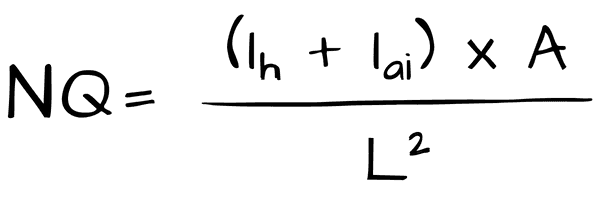
I_h is human insight—the creativity, wisdom, and experience of the team.
I_ai is artificial lift—what AI and smart tools add to the mix.
A is alignment—how connected, coherent, and emotionally in-sync the team is.
L is latency—the time it takes to go from signal to action (and it’s squared, because delay drags everything down).
In other words, intelligence isn’t just what you know.
It’s how quickly and cleanly your system can respond to what it senses.
Do: Start Tuning the System
Try this: pick a recent moment when your team got stuck. Don’t ask who was at fault. Ask:
What signal was missed?
Where did insight show up but not land?
What slowed the response?
Was the alignment felt—or forced?
Now flip it. Think of a moment when everything clicked. What flowed? What was different?
That’s your first glimpse of NQ in action.
Teach: Lead the System, Not Just the People
Quantum Leadership isn’t about being the hero. It’s about becoming the tuner of the system.
You don’t need to have all the answers. You need to create conditions where insight moves and people feel connected enough to act on it.
Teach this by modeling it:
Shorten the distance between noticing and naming.
Treat meetings as coherence builders, not status checks.
Ask better questions. Listen for signal. Move with just enough clarity.
Because in the end, leading in a post-AI world isn’t about outsmarting the machine.
It’s about helping the whole system get smarter—together.