Post-AI Leadership and the Loss of the Hero’s Journey
In the post-AI era, that heroic model of leadership feels increasingly out of step with the reality of how transformation happens. The heroic leader no longer holds all the answers — because the answers are now networked.

For a long time, leadership followed the arc of the Hero’s Journey.
A single figure. Called to a challenge. Battling adversity. Returning with wisdom.
It’s a compelling story—and it shaped how we viewed leaders: bold, visionary, slightly apart from the rest.
But something is shifting. In the post-AI era, that heroic model of leadership feels increasingly out of step with the reality of how transformation happens. The heroic leader no longer holds all the answers—because the answers are now networked.
The journey is no longer solitary—it’s shared, emergent, often distributed. And the wisdom doesn’t return from afar—it arises from within the system itself.
What we’re experiencing now is the slow and necessary unraveling of the Hero’s Journey as the dominant narrative of leadership.
Why the Hero No Longer Fits
There are three big reasons the hero model is losing traction:
AI has collapsed the gap between knower and knowledge.
Insight is no longer the rare commodity it once was. Anyone can summon information, draft strategies, or even simulate leadership tone with a prompt.
Teams are becoming more entangled and less hierarchical.
Leadership is showing up across layers, functions, geographies—not concentrated at the top.
Change is no longer episodic—it’s continuous.
The big call to adventure never comes, because we’re always in the threshold now. There’s no neat arc. Only ongoing adaptation.
The result? The Hero’s Journey can feel like an outdated costume worn in a world that has already moved on.
What Replaces the Hero?
We’re not replacing the hero with a new protagonist.
We’re replacing the story. The new narrative of leadership sounds more like:
Sensing > Solving
Hosting > Heroing
Emergence > Mastery
Coherence > Command
In this story, the leader isn’t the center of the plot.
They’re the curator of conditions.
They build the container. They tune the field. They listen for what’s trying to emerge—rather than impose what should happen. It’s less cinematic. But more real.
The Quantum Connection
This shift is echoed in the Quantum Leadership formula:
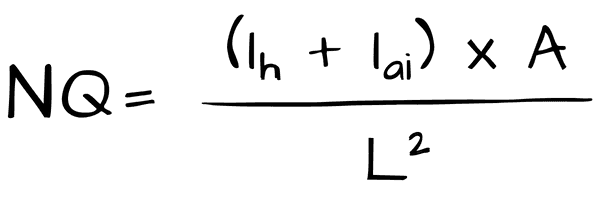
There’s no single hero in this model.
Instead, there’s:
Human insight (I_h), flowing through everyone.
Artificial lift (I_ai), available to all.
Alignment (A), created collectively.
Latency (L²), reduced not by force, but by shared readiness.
Leadership, then, becomes about managing the field, not commanding the parts.
That’s not heroic. It’s systemic.
What We Lose — And What We Gain
Letting go of the Hero’s Journey is disorienting.
It challenges identity. Ego. Legacy.
But we gain something in return:
Teams that don’t collapse when the leader falters.
Intelligence that doesn’t depend on charisma.
Change that doesn’t require a crisis to begin.
We gain systems that can lead themselves.
Not without humans — but with humans who know they are part of the field, not above it. The new story of leadership isn’t about slaying dragons. It’s about sensing what’s emerging, and helping it take form.
That may not make for a Hollywood ending. But it might just create a future that works.