How to Measure System Intelligence (Without Losing Your Soul to KPIs)
When we talk about Quantum Leadership, we’re not just talking about performance. We’re talking about the intelligence of the system itself. How fast it learns, how well it adapts, how coherently it moves. So how do we measure that?

Every leader I work with wants to know: How do we know if it’s working?
That’s a fair question. And a dangerous one.
Because what we choose to measure shapes how we behave. And if we only measure what’s easy to quantify, we end up reinforcing the very patterns we’re trying to change.
When we talk about Quantum Leadership, we’re not just talking about performance. We’re talking about the intelligence of the system itself. How fast it learns, how well it adapts, how coherently it moves.
This kind of intelligence isn’t just a reflection of individual talent. It’s the result of how the whole system behaves under pressure, in uncertainty, and across boundaries.
So how do we measure that?
Start with the Right Question
The question isn’t “How productive are we?”
It’s “How intelligently are we operating as a system?”
That means asking:
How quickly does insight move from one part of the org to another?
How often does important information get stuck, ignored, or overridden?
How long does it take to align around a good idea—and act on it?
How resilient are we when the plan breaks?
How emotionally connected is the team, even when distributed?
These aren’t traditional metrics. But they point to something deeper: the fluidity and fidelity of intelligence in the system.
The Quantum Formula as a Lens
This is where the Quantum Leadership formula becomes useful:
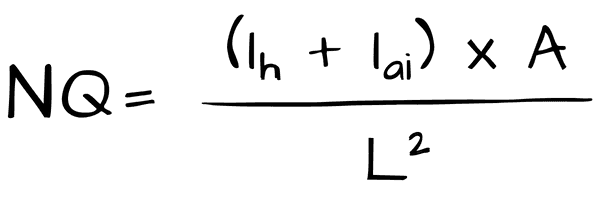
It doesn’t give you a hard number. It gives you a way of seeing.
I_h: Are we cultivating diverse human insight, or defaulting to a few loud voices?
I_{ai}: Are our AI tools actually amplifying capacity, or just automating old habits?
A: How aligned are we — emotionally, relationally, strategically?
L: What’s our average latency from knowing to doing? From sensing to shifting?
You could plug this into a dashboard, but more practically you can create reflection rituals, team conversations, and system sensing practices around it.
And when you do, something powerful happens:
You stop measuring people. You start measuring patterns.
Signals to Watch For
Here are a few signs of high system intelligence:
Insights surface from unexpected places.
Feedback loops are fast and safe.
Decisions don’t get stuck waiting for consensus.
People report a sense of “flow” when working together.
The system adjusts to disruption without leadership needing to be heroic.
And signs of low system intelligence?
Repetition of the same mistakes.
Chronic decision delays.
Emotional undercurrents not addressed.
AI tools used performatively, not productively.
“Busy” without clarity.
What to Do With What You Find
Measuring system intelligence isn’t about scoring or benchmarking.
It’s about attuning—noticing what’s stuck, what’s flowing, and what’s missing.
The job of the leader is not to hit metrics.
It’s to tune the system so intelligence can move freely.
You don’t need more KPIs.
You need clearer sightlines… and braver conversations.
Because when you start measuring what actually matters, the system starts to shift.
And you don’t lose your soul. You reclaim your role.