Can a System Be Conscious? And Should It Be?
When insight gets stuck, when decisions feel disconnected, when alignment is low and latency is high, what we’re really facing isn’t a people problem or a tech problem. We’re facing a system that can’t see itself clearly enough to adapt.

It’s a question that sounds philosophical at first. Maybe even a little esoteric. But in the rooms I work in — coaching executive teams, shaping strategy with leaders navigating complexity — it’s becoming increasingly practical:
Can a system become conscious of itself? And if so… what happens next?
Because when insight gets stuck, when decisions feel disconnected, when alignment is low and latency is high, what we’re really facing isn’t a people problem or a tech problem. We’re facing a system that can’t see itself clearly enough to adapt.
So yes — this question matters.
What Does “System Consciousness” Even Mean?
Let’s start here: a system becomes conscious when it starts noticing itself.
When a team not only executes, but reflects. When a culture becomes aware of its own norms. When a company doesn’t just deliver quarterly results, but questions why it does what it does the way it does.
This isn’t about installing mindfulness apps. It’s about cultivating the capacity for collective self-awareness. And in the language of quantum leadership, it’s about upgrading the operating system — not just the output.
The Quantum Frame
In the quantum leadership formula:
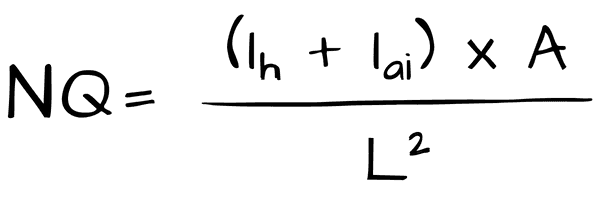
System consciousness shows up as:
High I_h: Teams that don’t just solve problems—but surface their own blind spots.
Wise use of I_ai: Tools that don’t replace thought, but reveal unseen patterns.
Deep A: Alignment built not just on agreement, but shared reflection.
Low L²: Minimal delay between insight and integration.
In conscious systems, intelligence flows because awareness is present. And when awareness is present, so is choice.
What Happens When a System Becomes Conscious?
Tensions become teachable moments.
Conflict becomes data — not danger.
Patterns get named earlier.
Leadership becomes a function of listening, not just directing.
And most importantly: the system begins to lead itself. Not in a chaotic, leaderless way — but in a responsive, intelligent, field-aware way. The leader’s role shifts from driving outcomes to tuning awareness.
Should Systems Be Conscious?
Here’s where the question gets thorny.
Consciousness brings complexity. Responsibility. Reflection. Some leaders might prefer unconscious systems — they’re more predictable, more controllable. But unconscious systems are also more brittle. They miss signals. They repeat dysfunction. They can’t grow past their structure.
So yes, consciousness has a cost. But the cost of not evolving is higher.
Especially in a world where AI is accelerating everything—except awareness.
That part is still deeply human. And deeply needed.
The Real Question
The question isn’t just “Can a system be conscious?”
It’s:
Are we willing to slow down enough to notice?
Are we brave enough to name what’s real?
Are we clear enough to move together when we see it?
Because in the end, conscious systems don’t just adapt. They transform. And so do the people within them.